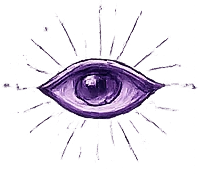
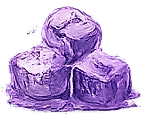
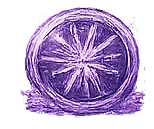
Metaphorical associative cards - also called MAC cards or OH cards, after the original European deck - are not a predictive tool. They don't tell you what will happen. They do something stranger and more useful: they show you what's already happening inside you, in the images your eye is drawn to, in the questions a picture won't stop asking.
The concept comes from projective psychology. When you look at an ambiguous image - a figure at a threshold, water with no visible bottom, a key beside a locked box - your mind immediately begins to fill in what isn't there. What you add is the signal. Two people can look at the same card and bring back completely different stories. Neither is wrong. Both are true for the person who told them.
How MAC cards differ from tarot
Tarot cards carry established symbolic vocabularies built across centuries of esoteric tradition. The Hermit means something. The Tower means something. Readers interpret those agreed meanings in relation to your question.
Metaphorical cards have no fixed vocabulary. The image of a woman standing at a window is not a good omen or a warning. It is an open prompt - a picture that waits for you to speak first. The practitioner working with MAC cards asks questions, not answers: what do you notice first? What do you avoid looking at? What story does this scene remind you of?
That shift - from symbol to open image - is what makes these cards useful for people who find traditional tarot too prescriptive, and for practitioners who work with coaching, therapy-adjacent self-inquiry, or shadow work.
The one-card draw
Pull one card and hold it for a moment before reading anything around it.
What's the first thing your eye goes to? Name it out loud or write it down. Then read the questions underneath the image and sit with whichever one pulls hardest. There's no correct answer. There's only what comes up for you, today, with this card.
A single card takes about ten minutes when you give it real attention. That's usually enough to surface something you'd been circling around.
The three-card spread
Draw three cards and lay them left to right.
A common framing: what I'm carrying / what I'm avoiding / what wants to move. But you can work with any question that has three dimensions - past, present, future; self, other, situation; what I see, what I feel, what I know but won't say yet.
The relationship between the cards often does more work than any single image. Notice which two feel connected. Notice which one sits outside the others. That friction is the reading.
What these cards are for
Self-inquiry without a practitioner. A prompt for journaling when words don't come on their own. A way into a conversation that's been difficult to start - with yourself or someone else.
MAC cards work well for people who feel stuck at a decision without knowing why. The image bypasses the part of the mind that's been rehearsing the same arguments in circles. You see something. Something in you responds. That response is data.
They're also used by therapists, coaches, and facilitators as a way to open sessions - not as a clinical instrument, but as a non-threatening entry point that lets a person say something true without having to announce they're saying something true.
A note on how to hold the results
Nothing in this card draw tells you what to do. The questions are not answers. What rises up when you look at an image belongs to you - it came from you, not from the card. The card just gave it somewhere to land.