What Is Tibetan Mo Divination
Tibetan Mo is one of the oldest living divination traditions in the world. Practiced in the Himalayan regions for over a thousand years, it belongs to the pre-Buddhist Bon tradition and was later woven into Tibetan Buddhist monastic practice. The word "Mo" simply means divination in classical Tibetan - the tradition has no need for a more elaborate name. It is the oracle.
Unlike many divinatory systems that work through interpretation of symbols, Mo works through a system of probability and sacred correspondence. Two dice are cast. The combination that appears - one of 36 possible pairings of values one through six - maps directly to a specific oracle text that has been transmitted through generations of practitioners. The reading is not invented in the moment; it is retrieved.
Traditional Mo was performed by lamas and trained divination practitioners for communities and individuals facing significant decisions. The practitioner would cast dice from a cup or bowl, read the combination, and deliver an interpretation drawn from texts held in memorized or written form. The 36 oracle texts represent the full range of human circumstances - from excellent fortune to genuine difficulty - and each carries specific guidance for the question at hand.
How the 36 Combinations Are Read
The number 36 is not arbitrary. It comes from the mathematics of two six-sided dice: six possible values on the first die multiplied by six possible values on the second gives exactly 36 distinct combinations. Traditional Mo texts map each of these 36 pairings to a named oracle result.
Each result carries a name drawn from the natural world - mountains, rivers, animals, celestial objects, ritual objects - because Tibetan divination thinks in images rather than abstractions. The name is the key that unlocks the oracle's teaching. "The Singing Bowl" carries a different quality of guidance than "The Snow Leopard" or "The Perfect Mandala." The name is not decoration; it is the teaching itself, compressed.
The quality of each combination is classified into one of five tones: excellent, good, mixed, challenging, or difficult. This classification is traditional - it does not originate with our interpretation but reflects the relative auspiciousness that Mo practitioners have associated with each combination over centuries of practice. A single excellent casting does not guarantee outcomes; a difficult casting does not predict failure. Both speak to the quality of conditions and the nature of the right response.
The Role of Syllables and Sacred Symbols
In classical Tibetan Mo, the oracle texts are organized not only by dice combination but by syllable. The sixty-four syllables of the Tibetan alphabet carry distinct energetic qualities in the Bon and Buddhist tantric frameworks, and advanced Mo systems map dice combinations to syllables to dice to protector deities to directional correspondences. The syllable system gives Mo its depth as a contemplative practice: a trained practitioner can read layers of meaning from a single casting.
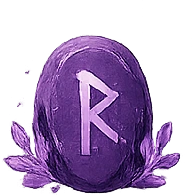
The most common traditional Mo syllables - often rendered in English as A, AA, RA, PA, TSA, NA, and others - each carry a field of association. The syllable RA, for instance, connects to fire energy, rapid movement, and transformation. The syllable NA connects to water, depth, and what lies below the surface. When the dice land on a combination mapped to a particular syllable, the oracle is read not just from the text but from the entire field of association that the syllable activates.
In this widget, the oracle texts draw from these syllable traditions without requiring the practitioner to study them directly. The essence of each syllable's teaching is woven into the reading text itself. What the tradition has encoded in one syllable, the reading unpacks in plain language.
How to Use This Widget
The Tibetan Mo oracle is designed for genuine questions - not for testing, not for entertainment, and not for questions you have already decided. The tradition is clear on this: Mo speaks most truthfully to the practitioner who approaches with genuine uncertainty and real stakes.
Before rolling, hold your question clearly in mind. It does not need to be a yes-or-no question, though many questions naturally take that form. What matters is that you have a specific situation in view - a decision, a relationship, a direction you are considering. The more specific your inward focus, the more precise the guidance will be.
When you are ready, cast both dice. The combination appears, and with it the oracle result - a name, a reading, and specific guidance for the four areas that Mo traditionally addresses: love and relationships, work and material life, the right action to take now, and what to avoid in this period.
Read the full text rather than scanning for confirmation of what you hoped to hear. Mo does not tell you what you want; it tells you what is. The reading that surprises you is often the one that serves you most.
If you choose to go deeper, the widget offers drill-down guidance for each of the four aspects - detailed counsel specific to the tone your casting returned. Use this when you need more than the overview and want the oracle to speak directly to a particular area of your life.
A Note on Practice
Tibetan tradition recommends approaching Mo in a settled state - after a moment of stillness, not in the middle of chaos. The oracle is not a slot machine. It is a conversation, and like all meaningful conversations, its quality depends partly on what you bring to it.
You may cast Mo once for a given question. Traditional practice does not encourage repeated castings until you receive the answer you prefer - this is understood to reduce rather than increase accuracy. Cast once, receive what arrives, and sit with it before deciding what it means for your situation.
The reading you receive is guidance, not verdict. The 36 oracle texts of Tibetan Mo have accompanied human beings through exactly the range of situations that constitute a life. They carry that weight. What you do with what arrives is yours to decide.