

Crystal correspondences sit on two layers. The bottom layer is mineralogy — what the stone actually is, what crystal system it grew in, what trace elements give it colour. The top layer is tradition — what folk practice and Renaissance lapidary writers said the stone was good for. Modern crystal books mostly inherit from Cunningham, Hall, and Melody, who in turn drew from Albertus Magnus and Hildegard of Bingen. Holding both layers at once keeps the practice honest: the stone is real, and so is the centuries of attention paid to it.
Below: fourteen stones from a single watercolor lineage, each with its mineral identity and the work tradition assigns to it.
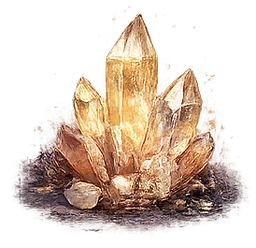
Citrine. Quartz variety, coloured by traces of iron. Most “citrine” sold commercially is heated amethyst — a real chemical change, but not the same stone as natural citrine, which is a softer pale honey rather than saturated orange. Traditional correspondence: solar plexus, will, and the slow-burning kind of prosperity that comes from doing your own work well. Cunningham called it the “merchants’ stone.” Hall describes it as clearing stagnation in personal momentum. It does not need cleansing the way most crystals do — sunlight is its native condition.
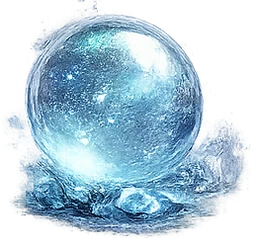
Aquamarine sphere. Beryl, hexagonal system; pale-blue cousin of emerald and morganite. Roman sailors carried it as protection against drowning; the Latin name means “seawater.” Traditional work: courage at thresholds, especially marriages and migrations; opening of the throat for honest speech; calming of the over-analytical mind. The polished sphere form is for scrying and meditation rather than wear. Best used during transitions where you have to speak first and feel the consequences later.
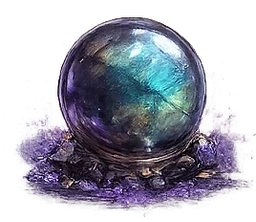
Labradorite. Plagioclase feldspar from Labrador, Canada — though the finest stones now come from Madagascar. The flash of green and blue (labradorescence) is light scattering inside microscopic mineral layers; it is structural, not pigmented. Traditional name: “stone of the boundary between worlds.” Carried by people who absorb other people’s emotions involuntarily. Hall reads it as protection during shamanic or therapeutic work. Holds up to sunlight without fading and can be worn daily without depleting.
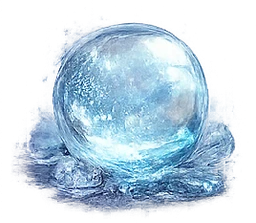
Clear Quartz. Pure SiO₂ in trigonal habit — the master crystal of European lapidary tradition. Has no specific correspondence of its own; its function is amplification. Whatever intention the practitioner brings, clear quartz steadies and extends. Used in scrying balls, meditation focus, and the centerpiece of crystal grids. The sphere is the form for divination; raw points are for charging other stones. Cunningham notes it is the only crystal that requires no learning curve — a beginner can pick one up and the stone meets them honestly.
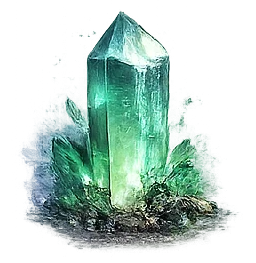
Green Tourmaline (Verdelite). Boron silicate, trigonal. Tourmaline crystals develop pyroelectric and piezoelectric charge — they generate measurable electric fields when heated or pressed. Different colours of tourmaline carry different traditional meanings; the green variety is the gardener’s stone, associated with the heart chakra and the steady physical body. Traditional work: recovery from illness without rebound; healing of relationships strained by overwork; restoration of appetite. A working stone, not a contemplative one.
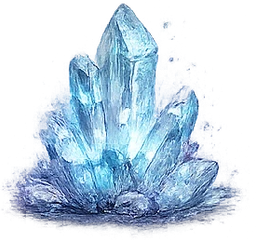
Celestite. Strontium sulfate. Pale-blue brittle clusters; the soft glow comes from trace strontium. Easily damaged by sunlight (the colour fades) and by water. Traditional correspondence: angelic communication, sleep that is free of rumination, the throat-and-third-eye axis. Best for those who wake in the middle of the night anxious — a small cluster placed on the bedside table is the classical use. Do not put it under the pillow; the clusters are too fragile for that.
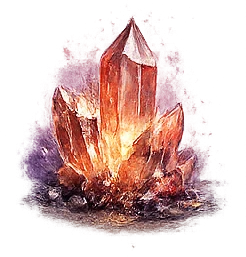
Carnelian. Chalcedony variety, iron-rich red-orange. The Egyptian “blood of Isis” amulet stone, included in the Book of the Dead among the seven mandatory funeral stones. Romans set it into seal rings because oily wax does not stick to its surface. Traditional work: vitality, the courage to begin a thing whose ending is not yet visible, restoration of menstrual cycle after disruption, sexual confidence. Quick action stone — it does not contemplate.
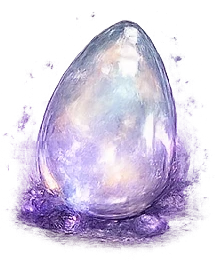
Moonstone. Orthoclase feldspar with adularescence — the inner shimmer that appears to move as the stone rotates. Three traditional meanings stack on it: the menstrual cycle, the journey, and intuition. Travelers carried moonstone for safe return; pregnant women for easy birth; readers for clearer dreams. The egg-shape, polished, is the classical form for charging on a windowsill during the waning moon. Best worn against skin rather than over clothing.
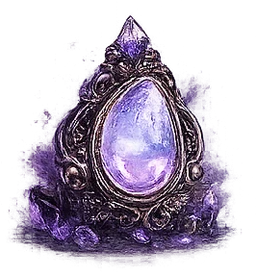
Charoite. Rare violet silicate found only along the Chara River in Yakutia, Russia. Marbled purple-and-grey with a distinctive swirl. First identified in 1978 — modern as crystals go — but adopted into the lapidary correspondences quickly because the swirling pattern resembles the descent in the myth of Persephone. Traditional work: integration of grief, transformation through difficulty rather than around it, sleep when the mind is metabolising loss. The cabochon form is for wear; raw chunks are for the bedside.
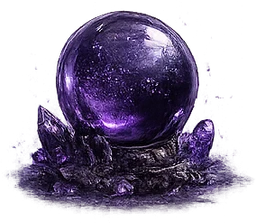
Sugilite. Rare lithium-iron silicate, deep purple-violet. Discovered in Japan in 1944, named after geologist Ken-ichi Sugi. No folk lineage — its meanings come entirely from late-twentieth-century writers (Hall, Melody, Simmons). Traditional work: spiritual love that doesn’t deplete the giver, protection for empaths in service professions, integration after long-form trauma. The polished sphere holds up to handling; raw sugilite is brittle.
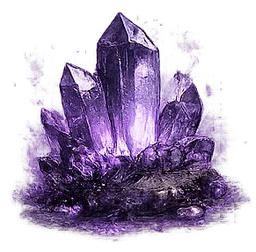
Amethyst. Quartz variety, iron-violet. The most-traded magical stone in recorded history. Ancient Greeks set amethyst in cups under the belief it prevented drunkenness — the name means “not drunk” (a-methystos). Traditional work: clarity of mind, sleep against nightmares, sobriety in the broad sense, the third eye. The default beginner crystal because it works alone — most other stones want pairing. The cluster form is for the room; tumbled stones are for the pocket.
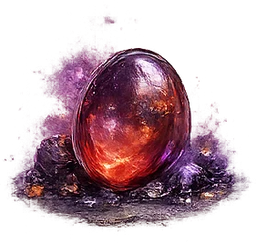
Garnet. Silicate group (almandine, pyrope, grossular and others) — deep red, occasionally orange or green. Carried by medieval crusaders for safe return; Hindu tradition gives it Mars and the second chakra. Traditional work: stable courage, strength in the blood and circulation, commitment, slow-burning passion. The opposite of carnelian’s quick flame — garnet stays. Polished cabochons hold the energy best; faceted gemstones are for adornment.
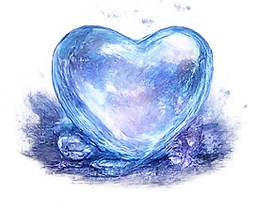
Blue Lace Agate. Microcrystalline chalcedony with delicate blue banding. South African deposits along the Orange River are the source of the highest-quality stones. Traditional correspondence: the throat chakra, soft truth-telling, calming of the nervous public-speaker. The stone you give to a child who has just learned not to cry in front of others — it does not stop the feeling, but it makes the feeling speakable. Best worn as a pendant near the throat.
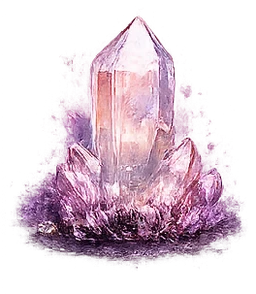
Kunzite. Spodumene variety, pale pink to violet. Strongly pleochroic — it shows different colour from different angles. Discovered in 1902 and named after the gemologist George Kunz. Traditional work: heart-chakra opening after grief, easing of self-criticism, the kind of love that has had to learn carefulness. Fades in direct sunlight; store in shade. Best for someone returning to relationship after a long withdrawal — it does not push, it permits.
The honest position on crystal correspondences is this: the meanings are not pharmaceutical. They are accumulated attention. A stone that has been treated as the throat chakra’s stone for nine hundred years carries that weight whether or not the user believes the cosmology. The practice works to the extent that the user is willing to spend time with the symbol. The stone is the occasion, not the agent.